TEMPUS ONE
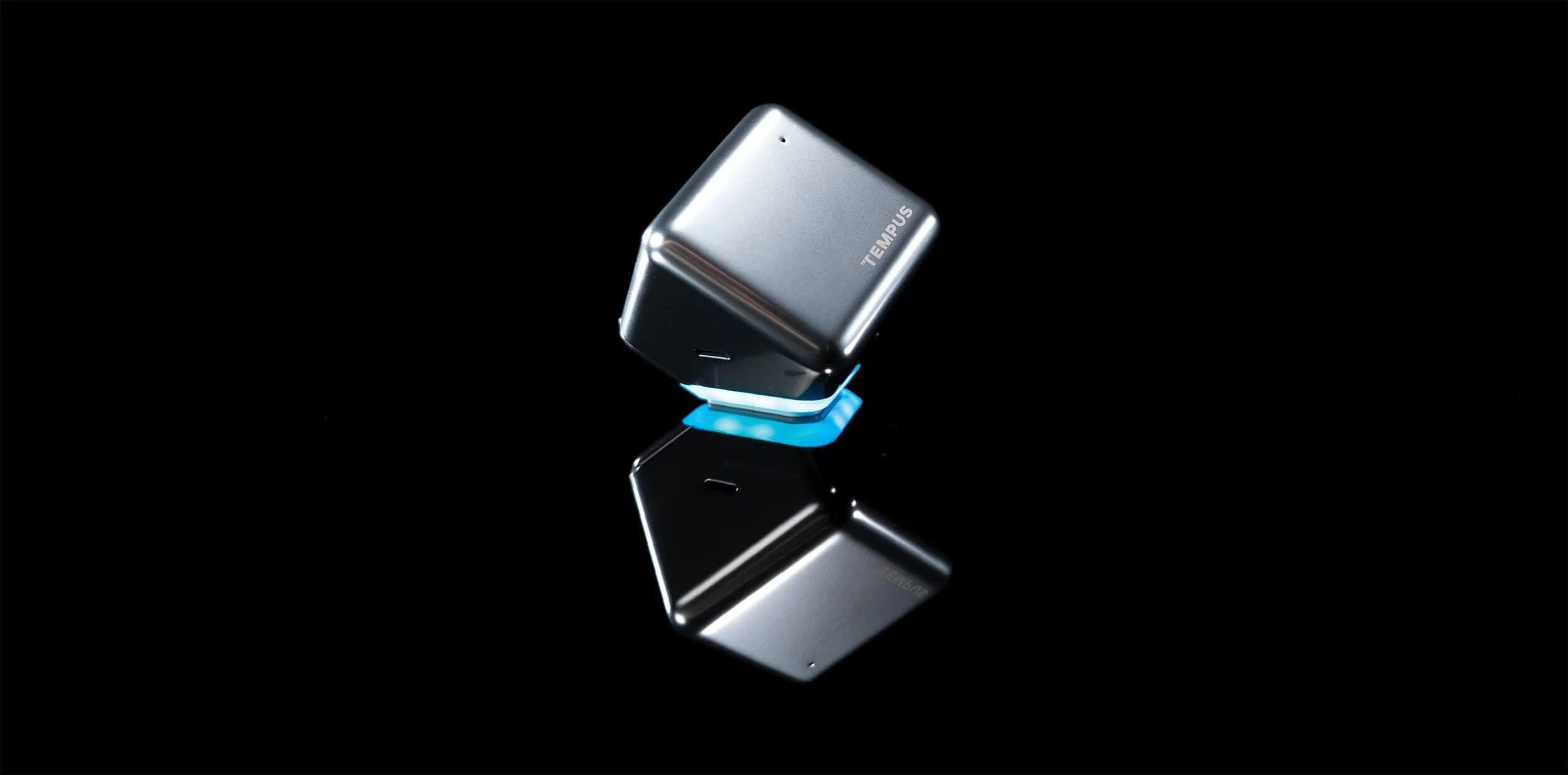
TEMPUS
At Tempus, I joined a stealth-mode initiative exploring how conversational AI could support oncologists in accessing patient data and clinical insights. Working as one of the first designers on the project, I led UX and voice interaction strategy, collaborated on companion app architecture, and consulted on device interface alongside external hardware specialists.
The challenge was designing for a completely novel interaction paradigm—physicians needed hands-free access to complex genomic data in time-sensitive clinical settings. I worked directly with oncologists to understand their workflows, prototyped conversation patterns, and iterated through multiple beta rounds before the pilot launch to external practices.
THE CHALLENGE
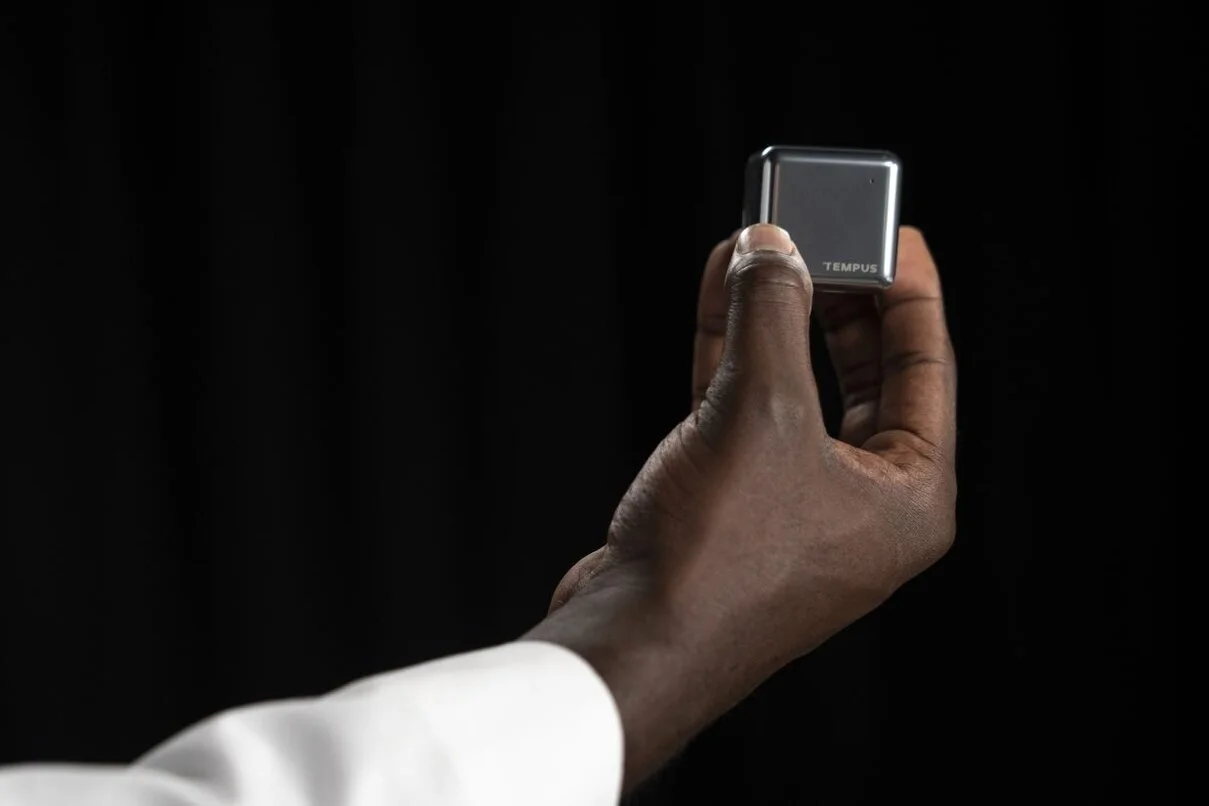
Design a sleek, high-end, voice-controlled device that gives physicians instant access to patient results and insights — fast, secure, and intuitive in real-world clinical settings
APP ARCHITECTURE
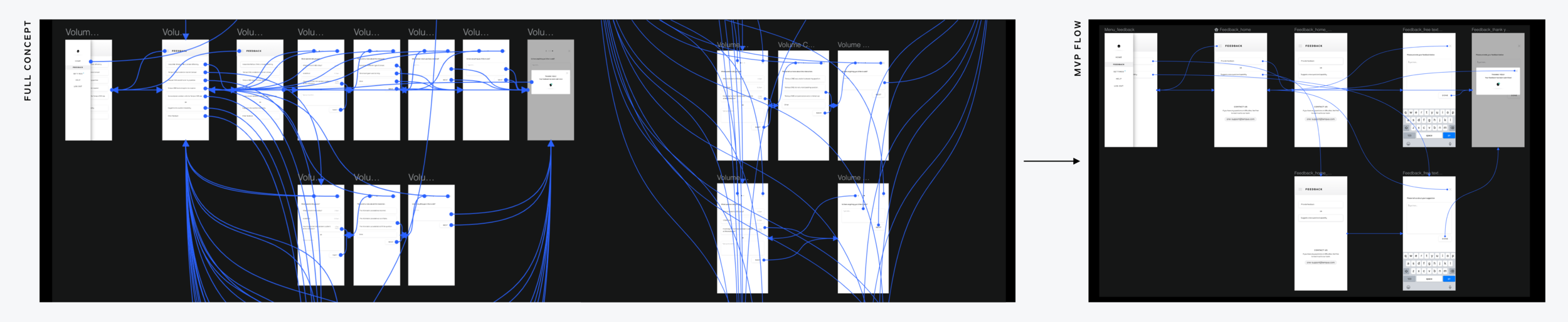
The app development focused on guiding users to get the most from an already-defined device. Rather than starting with product research, we designed a seamless journey to onboard physicians and help them engage with the device. We drew inspiration from smart device onboarding flows and product manuals that felt both delightful and intuitive.
Functionality
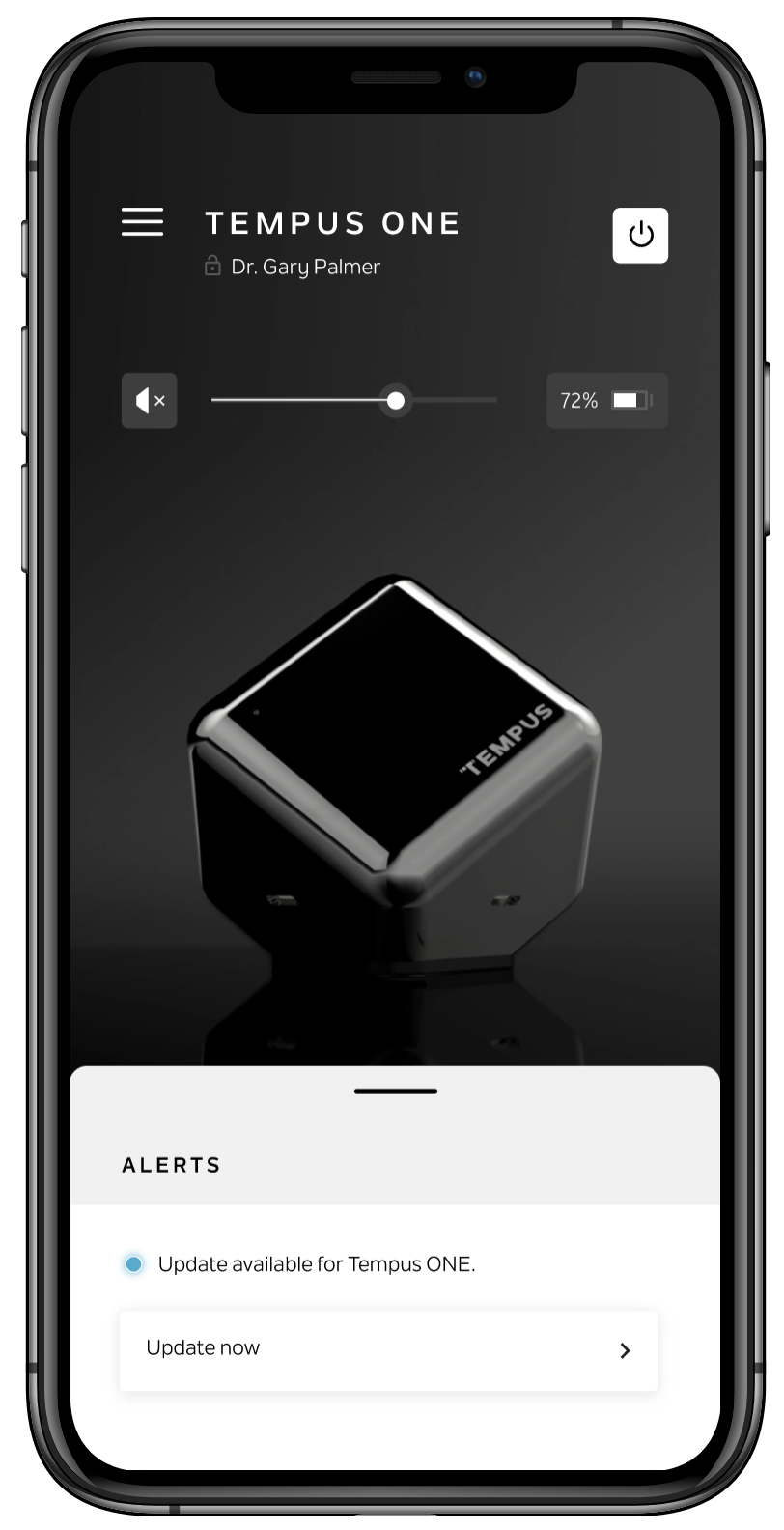
Connect users to their device and WiFi
Control device power and volume
Display longer content not suited for voice readout
Collect user feedback directly within the app
Support user education and troubleshooting
Enable in-app voice control (v2)
Onboarding
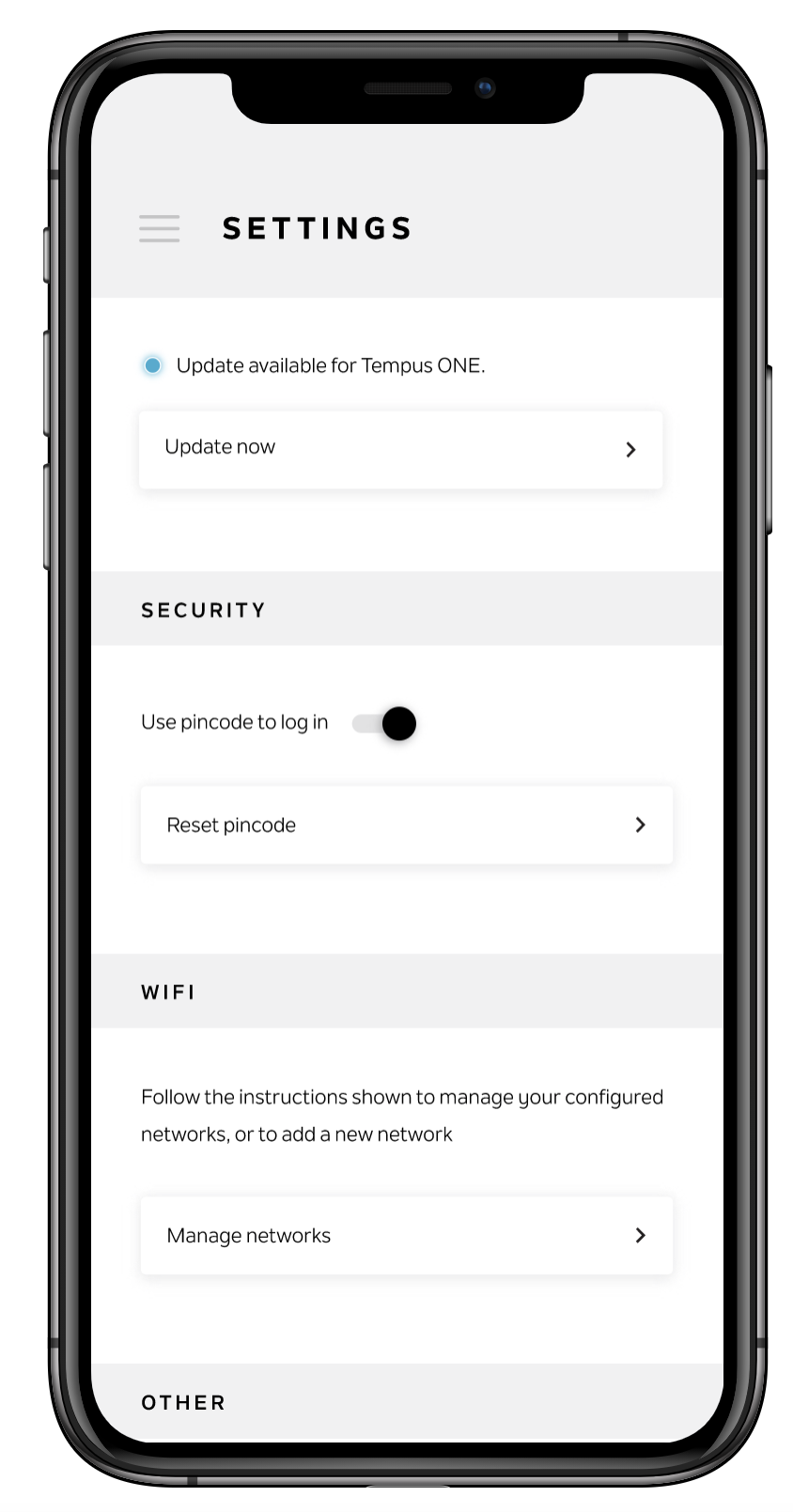
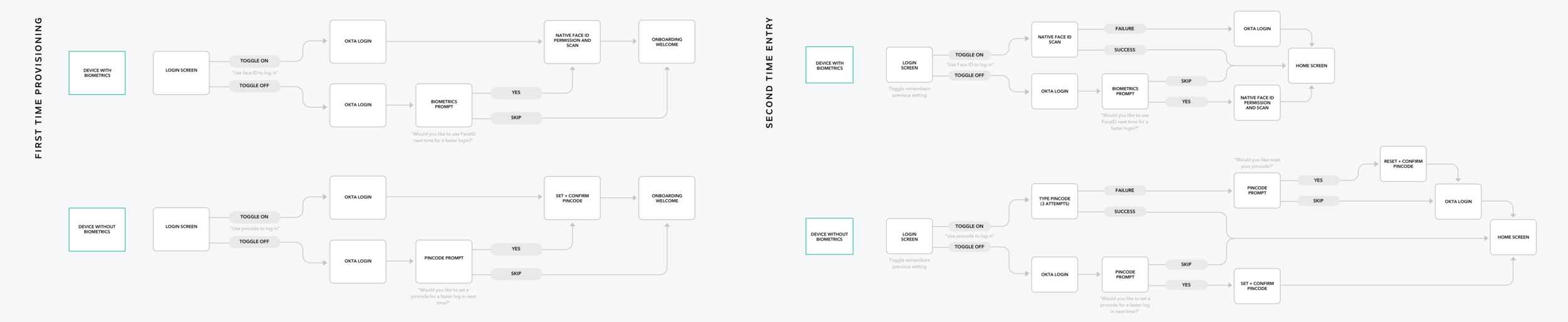
Setting up the device on a local network was inherently technical, so our focus was on making the experience as simple and reliable as possible. We streamlined access by enabling biometric login to bypass manual entry.
Above is a state diagram of the full onboarding journey, which guided the design of both in-app copy and visuals.
INTErACTION DESIGN
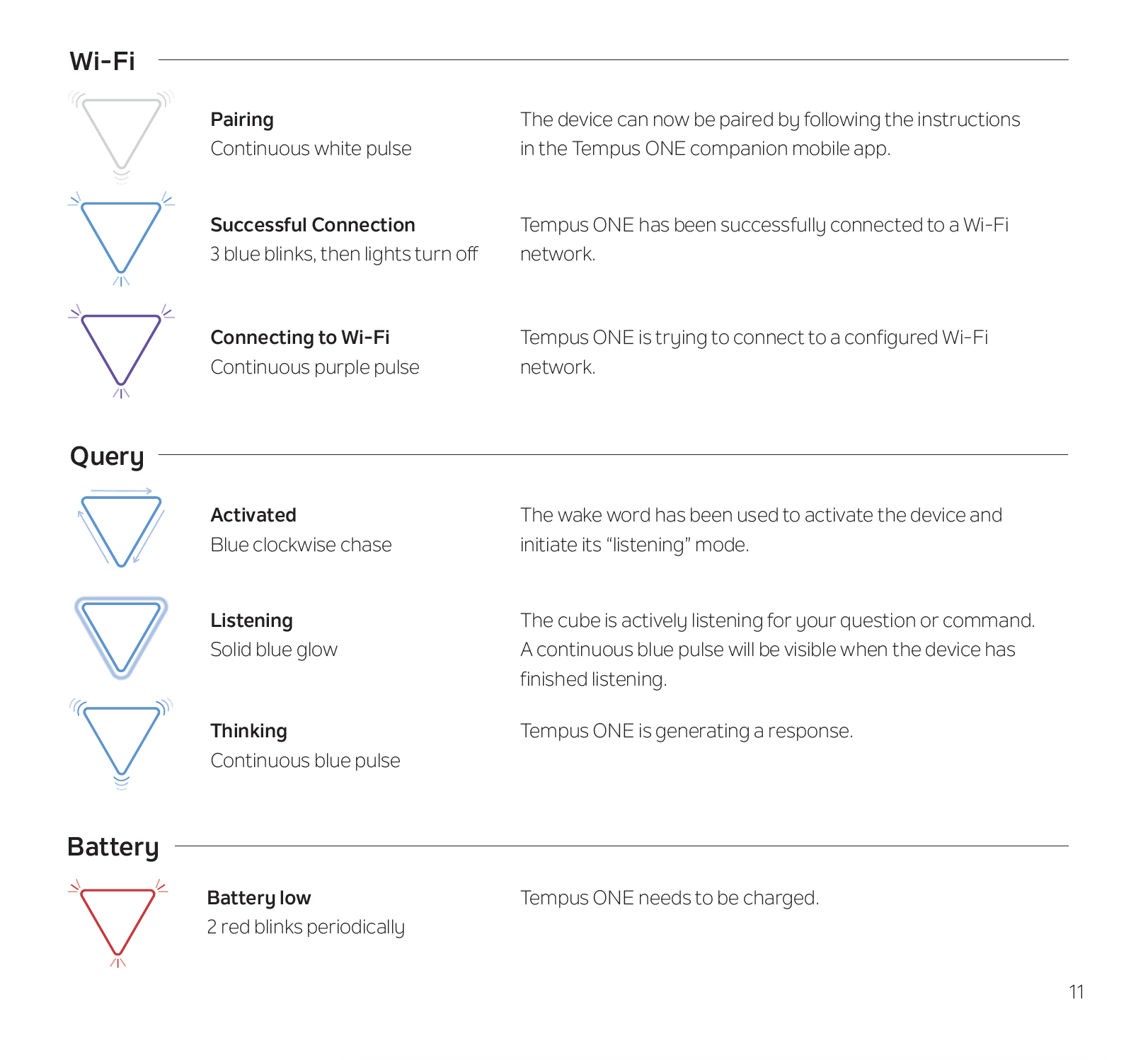
I designed the device’s interaction states, including visual and auditory cues, to guide users through setup, feedback, and error conditions. Subtle light patterns and sound signals helped communicate status clearly and intuitively, ensuring users always knew what the device was doing without needing to read the app or manual.
A note on the sound design: I collaborated with a Product Manager (and weekend DJ) to craft custom audio cues for each device state. We treated it as a creative side project, demoing sounds for the team and developing a distinctive “voice” for the product. The goal was for Tempus ONE to feel uniquely ours, unlike any other smart device or assistant on the market.
USER MANUAL
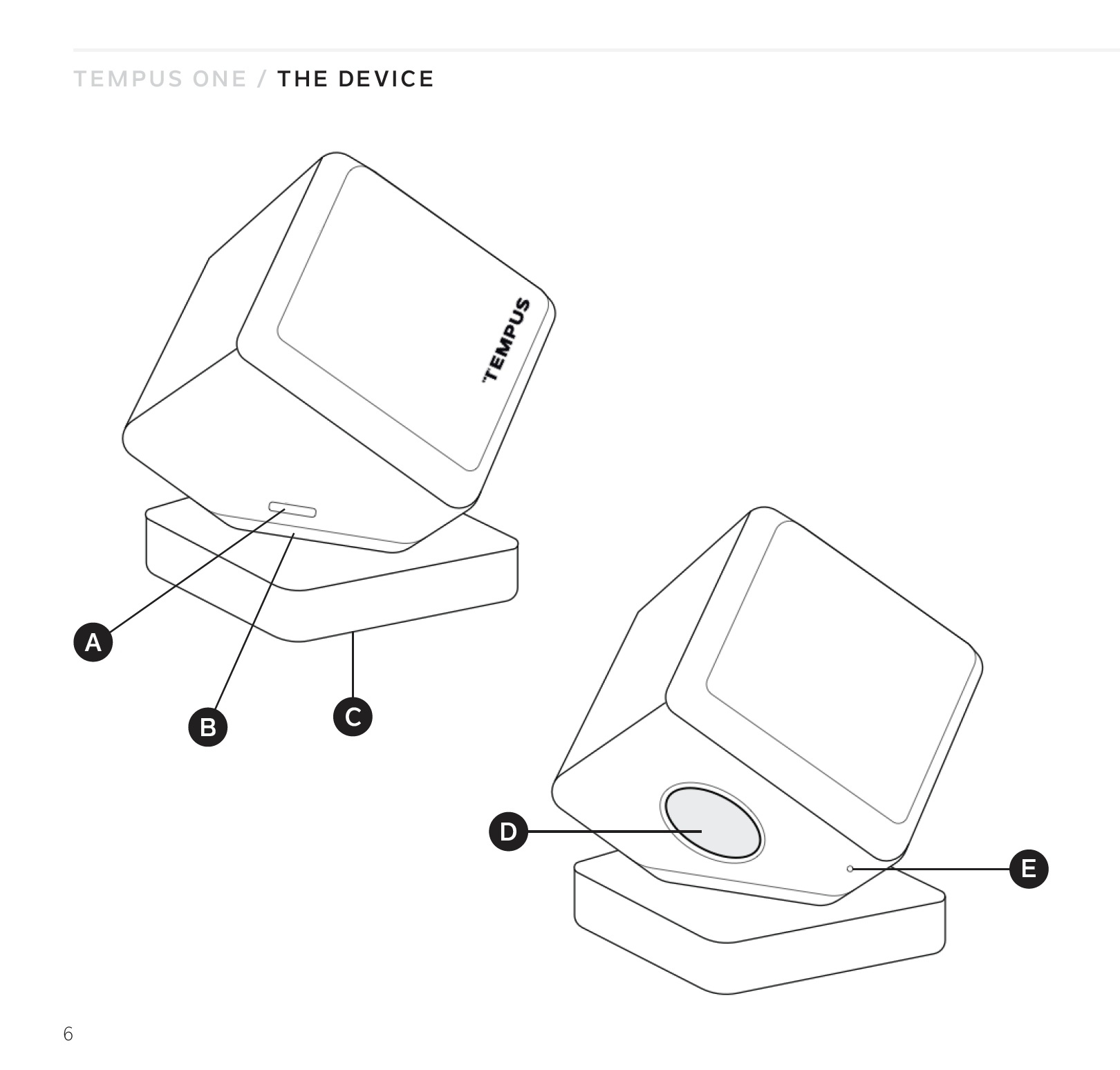
I collaborated with our brand designers to create user manuals for beta users, incorporating best practices for onboarding. Much of the content drew directly from my early work on interaction design, VUI, and lighting states to ensure consistency between the device, app, and supporting materials.
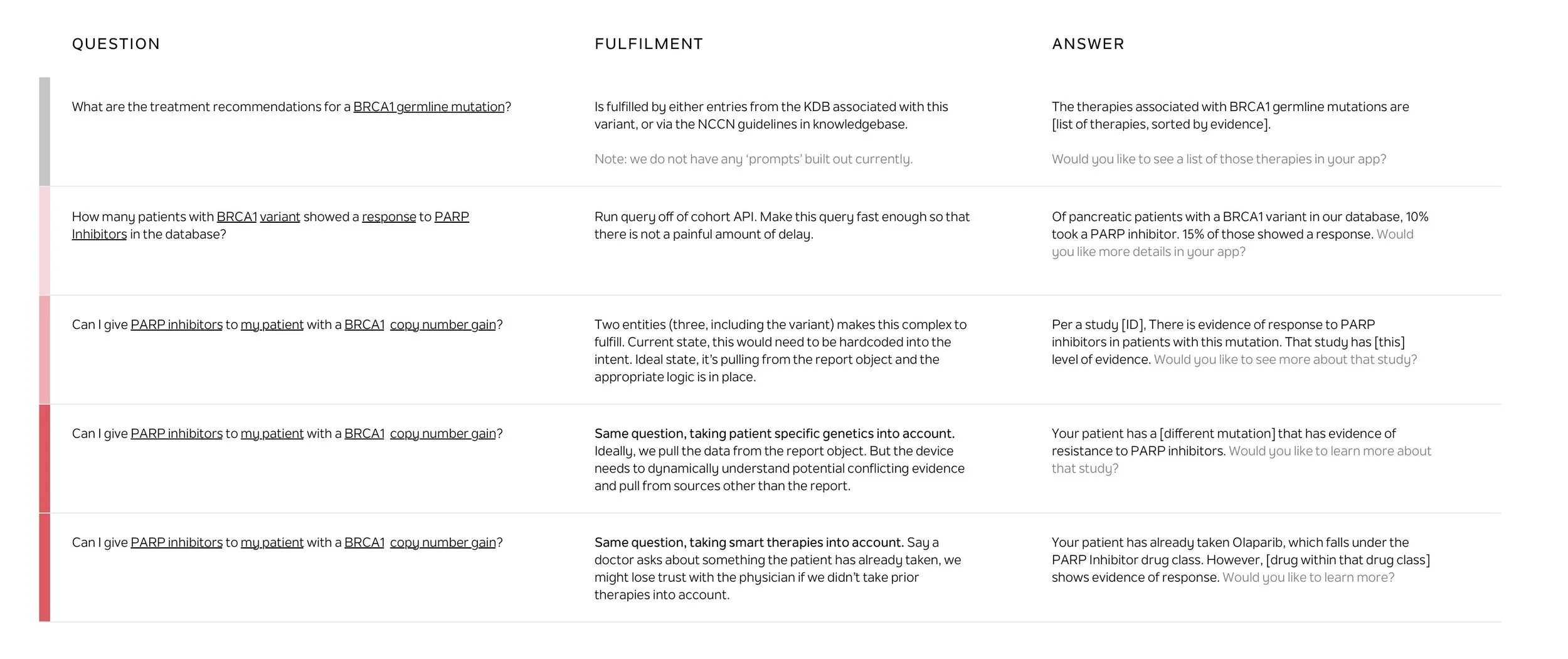
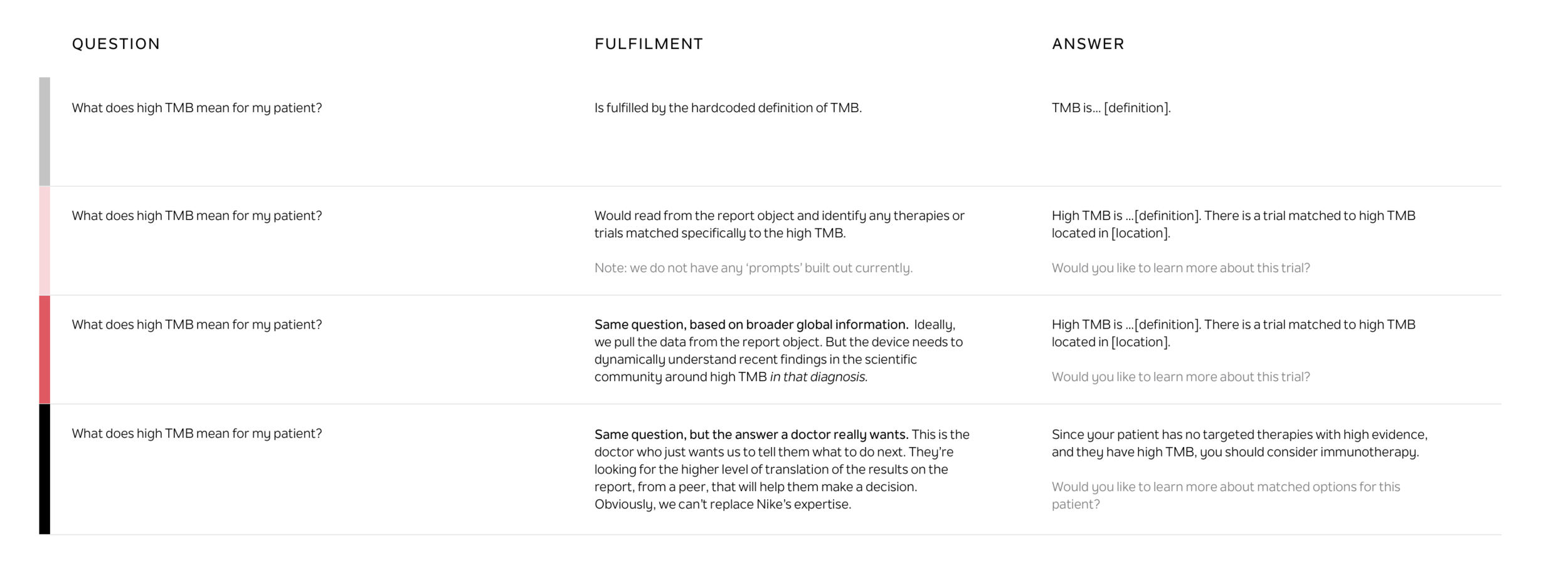
During Tempus ONE’s development, I worked closely with the content team to shape the device’s language, tone, and personality, as well as appropriate error states. I created documentation to guide beta users on what questions the assistant could safely answer at each stage, helping both onboarding and training.
All copy and responses underwent thorough legal review to ensure ONE remained a safe and reliable assistant for providers.
QUESTION AND RESPONSE DESIGN
OUTCOMES
Tempus ONE was piloted with a small group of external users and publicly announced in early 2021. Most app development wrapped in early 2020, after which I shifted focus to COVID initiatives. The current team continues to collect user feedback and explore how to integrate ONE’s experience into Tempus’s broader oncology interfaces.